Cakes, Cones and Candle-Spitters: A First-Timer's Map of the Garden Firework Box
Walk into any firework retailer in 2026 and you'll meet a wall of bright boxes, punchy names and labels covered in small print. It's easy to buy on impulse and end up with five things that all do roughly the same job. The trick is knowing what each category actually does in the sky, how much room it needs, and where it fits in a short garden show. This isn't a shopping list — it's a map.
One thing before we go any further: the label always wins. Buy from a licensed UK retailer, read the firing distances and spectator distances on the box, and follow them. Fawkingood Fireworks is all for big bangs, but only the safe, well-spaced kind.
Cakes: the one-match mini-show
A cake (sometimes called a barrage or a repeat) is a single box packed with lots of tubes. You light one fuse and it fires a sequence — often 20 to 60 seconds of colour, crackle or a fan-shaped sweep. It's the closest thing to a mini display in a single purchase, which is why cakes are the backbone of most garden shows.
Clearance matters. Many garden cakes ask for 8 to 25 metres of spectator distance, and some of the bigger ones want more. Don't stand over it, don't lean across it, and don't try to fire two cakes at once unless the instructions specifically allow it. Set it on flat, firm ground, weigh down the edges if it's breezy, and step back to the distance on the label.
Fountains: the slow warm-up
Fountains are cones or pots that sit on the ground and throw a steady column of sparks upwards for roughly 30 to 60 seconds. They're low-level, theatrical and brilliant at the start of a show because they build atmosphere without demanding everyone's full attention. Most garden fountains need around 5 to 8 metres of clearance.
Put them on a level patio or a firm lawn, well away from hedges, fences and anything dry. They're not a finale item — they're the opening act that gets people looking up before the first cake goes off.
Mines: the big vertical punch
A mine is a single-shot firework that fires a burst of stars straight up and out in one quick go. You get a couple of seconds of wow, then it's done. That makes mines excellent punctuation between cakes — a sudden vertical burst that resets the eye.
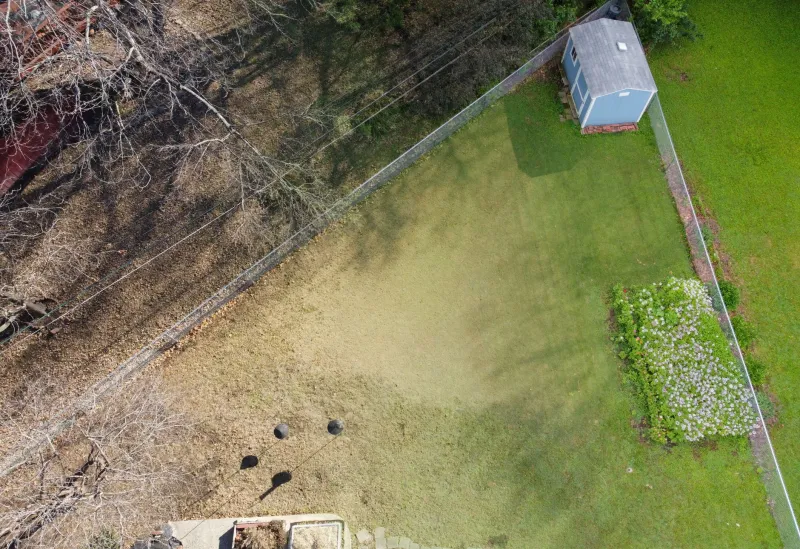
Because that burst goes up and outward, mines need serious overhead clearance. Check for low tree branches, phone lines, aerial cables and anything else hanging over the garden. Spectator distances are often similar to cakes, so read the label rather than guessing. One mine at a time, always.
Rockets: the tallest ticket in the box
Rockets are the ones with a stick, launched from a bottle or a proper launch tube. They whistle or whoosh up, then burst high above. They're the tallest thing you'll fire in a typical garden, which means they need the most clearance of anything here — often 15 to 30 metres of spectator distance, plus a clear flight path overhead.
Never light a rocket from your hand. Never fire one in a small garden with trees, cables or a low roofline in the way. Check the wind direction, point the launch tube slightly downwind, and recover the spent sticks afterwards so they don't end up in next door's flowerbed.
Roman candles: the steady stripers
Roman candles are tubes that fire a series of stars into the air one after another, usually over 30 to 60 seconds. They give a lovely rhythm — pop, pop, pop — and they're a good middle-of-show item when you want something steady rather than a single big hit. Typical garden clearance is around 8 to 15 metres, but again, the label is the authority.
Stake them or set them in a proper stand so they can't tip. A roman candle that falls over is a genuinely bad evening.
Sequencing a balanced garden show
You don't need many items to make a garden feel like an event. A simple 15 to 20-minute show might run: fountain to open, cake one, a pair of rockets, a mine as a punctuation mark, cake two, roman candles for rhythm, then a final cake as the closer. That's six or seven purchases, not twenty.
Buy for variety rather than volume. A box full of near-identical cakes will feel repetitive; a mix of low-level, mid-level and high-level effects will feel like a proper show. And keep a bucket of water, a torch, gloves and a metal bucket for spent items within easy reach. Tell the neighbours in advance, keep pets indoors, and check the wind before you light anything.
The bit people skip
Read the label in daylight, before the event, not by phone torch at 8pm. Check the spectator distance, the minimum age, the noise level and any specific instructions. If a firework looks damaged or has been sitting in a damp shed since last year, don't fire it — dispose of it sensibly.
A garden show is a small, brilliant thing when it's done with a bit of thought. Pick a handful of items that do different jobs, give each one the space it asks for, and let the sequence do the work. Big bangs, safe celebrations — that's the whole idea.