Sheds, Slopes and Squeezed Patios: Laying Out Fireworks in a Proper British Back Garden
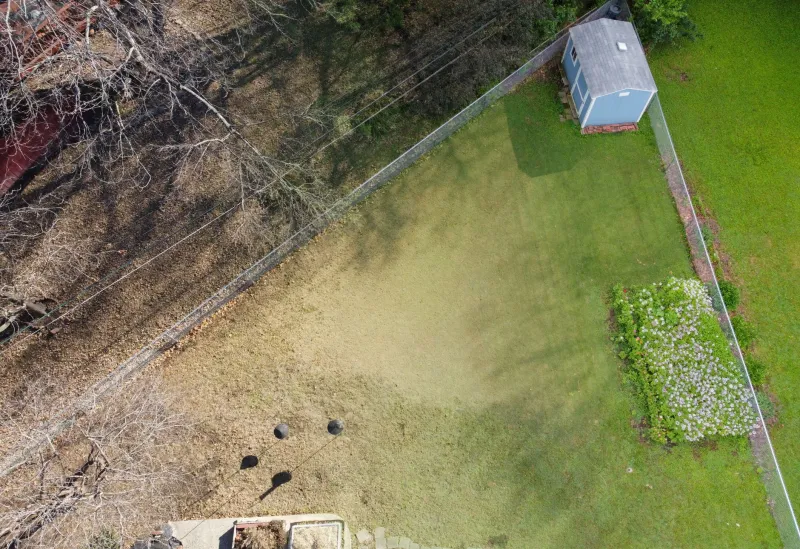
There is a certain kind of firework advice that clearly assumes you live on a wide, flat rectangle of grass with nothing on it except perhaps a tasteful bench. No shed. No rotary line. Certainly no trampoline. If that's your garden, congratulations — but the rest of us are working with a postage-stamp lawn, a fence that leans, a patio with a mysterious slope, and a wheelie bin that has somehow claimed the best spot in the postcode.
The good news is that you do not need a football pitch to put on a confident, crowd-pleasing garden display. You need a tape measure, an honest five minutes in daylight, and a plan that respects the space you've actually got. That's it. No mystique.
Start with the garden you have, not the one in the adverts
Before you buy anything — before you even open a box — go outside in the afternoon with a tape measure, a bit of chalk or a few plant pots, and a completely unsentimental eye. Walk the garden. Note where the ground is level and where it isn't. Note where the shed sits, where the fence panels are driest, where the washing line is anchored, where the drain runs, and where the back door opens onto the patio.
Then measure. A garden that's roughly eight metres by six metres is perfectly capable of hosting a Category 2 garden selection — the sort sold for back gardens — provided you're honest about where the safety distance lands. That distance is usually five metres for garden fireworks, but the label is the boss, not a blog post. Some items ask for more. Read the box, and measure from the firework to the nearest person, pet, fence, shed or flammable thing, not from the middle of the lawn and a hopeful squint.
Three zones, not one
Most layout mistakes come from treating the whole garden as a single space. Break it into three.
The firing zone. This is where fireworks actually sit. It needs to be flat, stable and clear. A paving slab, a sheet of plywood or a dedicated board is ideal, because fireworks that wobble are fireworks that tip. Keep the firing zone away from overhanging branches, the shed wall, the conservatory and anything with a petrol can or a paint tin inside it.
The fallout zone. This is the area the label tells you to keep clear. Nothing in it. No spectators, no pets, no garden furniture, no cars on the other side of the fence, no greenhouse that you'd rather kept intact. In a small garden, this is the zone that decides your layout — everything else arranges itself around it.
The spectator zone. This is where people stand, sit and ooh. Put it behind a clear line — a rope, a row of plant pots, a chalk mark on the patio — and make sure it's outside the fallout zone, ideally upwind, with a view that isn't blocked by the shed.
The slope problem
Slopes are the quiet enemy of a garden display. A firework on a slant can tip, and a tipping firework is unpredictable in the least fun way. If your only flat-ish spot is a patio, use it. If the lawn slopes where the ground meets the patio, build a level base: a paving slab on a bed of sand, checked with a spirit level, is a boring answer that works.
And think about direction. Firing uphill towards the house is not a plan. Firing downhill towards a fence, a neighbour's conservatory or a public footpath is also not a plan. Angle the display so that the sky above your fallout zone is genuinely open, and so that anything that comes down lands where you've decided it's fine for it to land.
Sheds, fences and the things that won't move
Sheds are often the most combustible thing in a British garden — dried timber, old paint, a mower with a bit of fuel in it, and a shelf of things you meant to sort out in 2019. Give the shed a wide berth, and don't fire over it unless you can see exactly what is on the other side. Fence panels are the same story: dry, weathered and happy to catch a spark. Keep cakes and fountains a sensible distance back, and don't balance anything on decking.
Clear the clutter before you clear the sky
Take the washing in days before, not minutes before. Take the rotary line down entirely. Move the trampoline — it's a giant sail, a trip hazard and a magnet for falling debris. Stack garden chairs and cushions away from the firing zone. Wheelie bins go around the front or into the garage, because melted plastic smells exactly as bad as you'd imagine.
Sightlines and the standing-around problem
Stand where your guests will actually stand: by the patio doors, on the step, at the kitchen window. Can you see the firing zone clearly? Is the shed in the way? Is the best view from a spot that's technically inside the fallout zone? If so, move the firing zone rather than the people. It's much easier to shift a board and a bucket than a crowd of excited children.
Also spare a thought for the neighbours. Angle the display so you're not firing directly at a bedroom window, and keep the noisiest items for a reasonable hour. A good display is one the street enjoys, not one it endures.
Wind, smoke and a small garden
Check the wind before you set anything out. Fire downwind where you can, so smoke drifts away from spectators rather than into their faces. In a sheltered garden with swirling air, choose low-smoke fountains and mines rather than a wall of Catherine wheels. And if the wind is strong enough to move a fence panel, it's strong enough to cancel the display. There's always another night.
Small space, big finish
You don't need quantity. A couple of good fountains, a low-noise cake, a handful of single shots and one proper finale will feel like a show in a small garden, especially if you stagger them rather than setting everything alight in ninety seconds. One firework at a time. Never return to a firework that hasn't gone off. Wait fifteen minutes, then soak it in a bucket of water.
The five-minute walkthrough
Before anyone lights anything: torch, bucket of water, gloves, eye protection, a headcount, pets indoors, gate locked, one sober adult in charge of the lighter. Walk the three zones one last time. Then step back, look up, and enjoy it.
Your garden doesn't need to be Wembley. It needs a tape measure, a bit of honesty about the awkward bits, and the sense to let the space do the work.