The Case for the Quiet Firework: Why Less Bang Can Mean More Wow in 2026
Photo: Staff Sgt. Nathan Hoskins, Public domain, via Wikimedia Commons
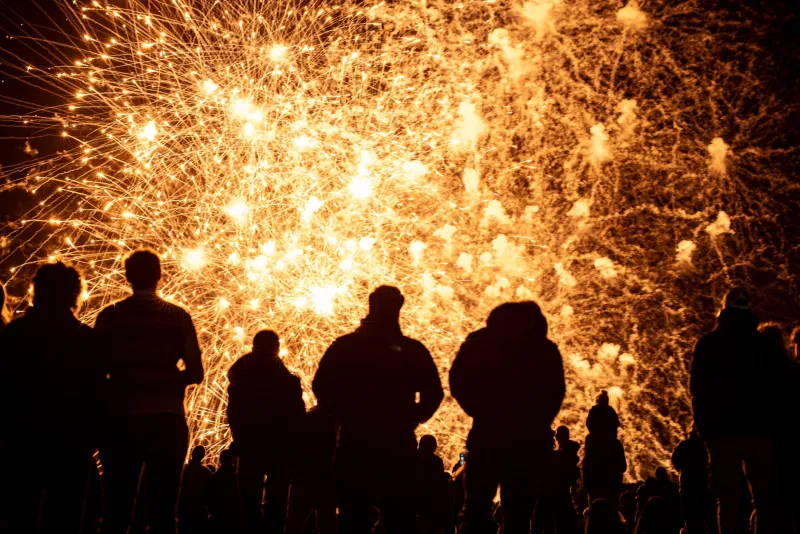
There is a particular kind of silence after a firework display that has gone right. Not the silence of disappointment, but the hush of a crowd that has just seen something beautiful and is waiting for the next moment. In 2026, that silence is becoming the point. Low-noise fireworks are no longer a niche product for pet owners; they are a mainstream choice for families, venues and neighbours who want the thrill of a display without the fallout. At Fawkingood Fireworks, we are not against big bangs. We are against thoughtless ones. The case for the quiet revolution is simple: less noise, more consideration, and—if you choose well—no less wow.
The problem with the traditional bang
Fireworks are loud by design. A traditional salute can hit 150 decibels or more, which is roughly the same as a jet engine at close range. For most of us that is a thrill; for a dog, a horse, a baby or a neighbour with sensory sensitivity, it can be genuinely distressing. The UK has rules on when you can set fireworks off, but rules do not cover the lived experience of the street. That is where low-noise products come in. They are not silent—nothing that burns and launches is completely silent—but they are designed to reduce the sharp, percussive bang that travels furthest and frightens most.
What low-noise actually means
Low-noise fireworks usually replace the explosive report with a softer pop, a whistle, a crackle or a colour-only effect. Think fountains, wheels, Roman candles and cakes that focus on colour and movement rather than concussion. Some retailers label products as quiet or pet-friendly; treat those labels with common sense. Check the description, watch a demo video if available, and ask the retailer what the effect actually sounds like. A good low-noise cake still gives you a proper finale—it just does it with a shimmer rather than a shockwave.
Why pet owners and parents are leading the change
Ask any dog owner about 5 November and you will get a story. The same goes for parents of small children who wake at every bang, and for shift workers who need sleep. Low-noise fireworks let those groups join in rather than hide. They also make sense for venues: a wedding in a village, a festival near a farm, or a community event with a noise curfew. The demand is not about spoiling anyone's fun. It is about widening the circle of people who can enjoy the display.
The safety case is just as strong
Quieter fireworks are not automatically safer—they are still explosives and must be treated with respect. But low-noise products often encourage better habits. They tend to be ground-based, which means less debris and a smaller fallout zone. They are easier to use in smaller gardens. And because they are less startling, people are more likely to plan a display properly rather than impulse-buy the biggest box in the shop. The safety basics still apply: buy from a reputable UK retailer, check for UKCA marking and BS EN 15947, read the instructions, light one at a time, keep spectators back, and never return to a lit firework.
Product inspiration for a considerate display
Start with fountains. A good fountain gives you height, colour and a bit of crackle without the neighbour-annoying bang. Add a low-noise cake for a finale, and a couple of Roman candles if you want a bit of drama. For weddings, look at low-smoke fountains and cold-spark machines. For Halloween, go for green and purple effects. For New Year's Eve, a compact low-noise cake timed to the countdown is hard to beat. And if you are planning a public event, talk to a professional operator who can design a low-noise sequence that still feels like a proper show.
But what about the wow factor?
This is the question we hear most. The answer is that wow is not the same as volume. A fountain that changes colour three times, a cake that builds to a glittering finale, a sparkler exit that lights up a wedding photo—these are the moments people remember. Big bangs have their place, but they are not the only tool in the box. In 2026, the smartest displays are the ones that balance thrill with consideration. That is the Fawkingood way: big bangs when they are appropriate, safe celebrations always.
A quiet revolution, not a quiet surrender
None of this means banning the bang. It means choosing it deliberately. If you have the space, the permission and the neighbours on side, a traditional display can still be magnificent. But if you are in a terrace, near a farm, or hosting a party with a nervous dog, low-noise fireworks give you a way to celebrate without apology. The quiet revolution is not about less fun. It is about more thought—and, frankly, better displays.
The Fawkingood take
We sell fireworks because we love the moment when the sky lights up and everyone goes 'ooh'. We want that moment to be available to more people, in more places, with less stress. Low-noise fireworks are not a compromise; they are a design choice. So this year, ask yourself what kind of display you actually want. If the answer is spectacular but considerate, welcome to the quiet revolution.